
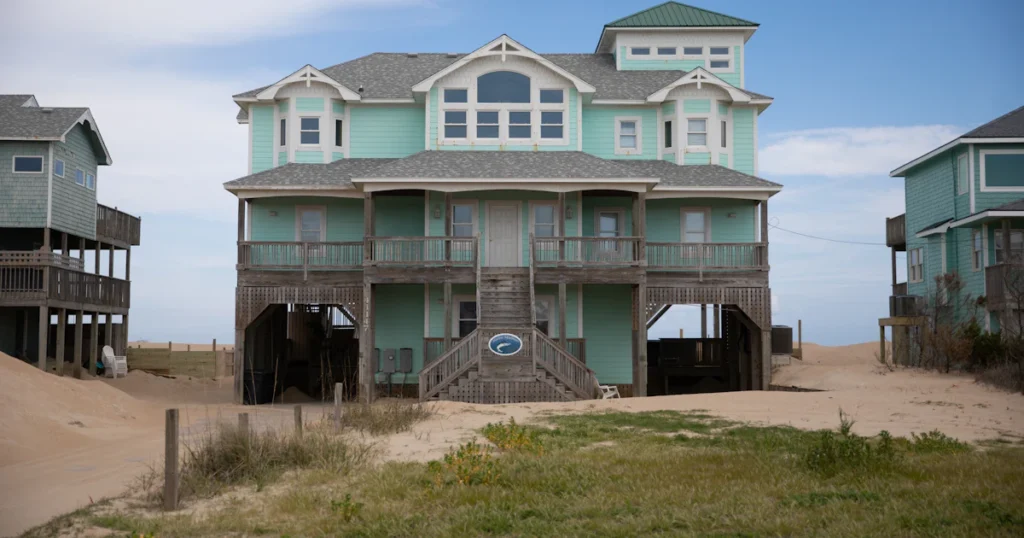
Zone AE is one of the most common flood zones on Florida’s flood maps, and much of what people read about it is about insurance. For anyone building a new home, adding on, or making a major renovation, the bigger question is what the building itself has to do. In zone AE, the answer starts with one number on the map: the base flood elevation.
What Flood Zone AE Means
FEMA’s Flood Insurance Rate Maps mark the areas expected to flood in the base flood, the flood that has a 1 in 100 chance of being equaled or exceeded in any given year (often called the 100-year flood). These areas are Special Flood Hazard Areas, and they carry zone labels such as A, AE, AH, AO, V and VE.
Zone AE is the part of that floodplain where the map gives a base flood elevation: the height the water is expected to reach in the base flood, measured from the map’s elevation datum, not from the ground. Zone A, by contrast, has no published base flood elevation, and zone VE is the coastal area that also faces waves. Zones X are outside the Special Flood Hazard Area.
The Key Number: Base Flood Elevation Plus One Foot
In Florida, the Florida Building Code requires the lowest floor of a new home in the floodplain to be elevated to at least the base flood elevation plus 1 foot. Collier County, for example, describes this as the most important step when building a residence in the Special Flood Hazard Area, and calls it a requirement of the Florida Building Code. Local governments can add their own rules on top: Collier County also sets a minimum height above the crown of the road. Your floodplain administrator gives the base flood elevation and any local additions for your address.
Because the lowest floor height drives the whole design, a flood elevation is usually one of the first things on a new home or addition project. A surveyor prepares the elevation data; the structural design then works from it.
Ways to Elevate a Building
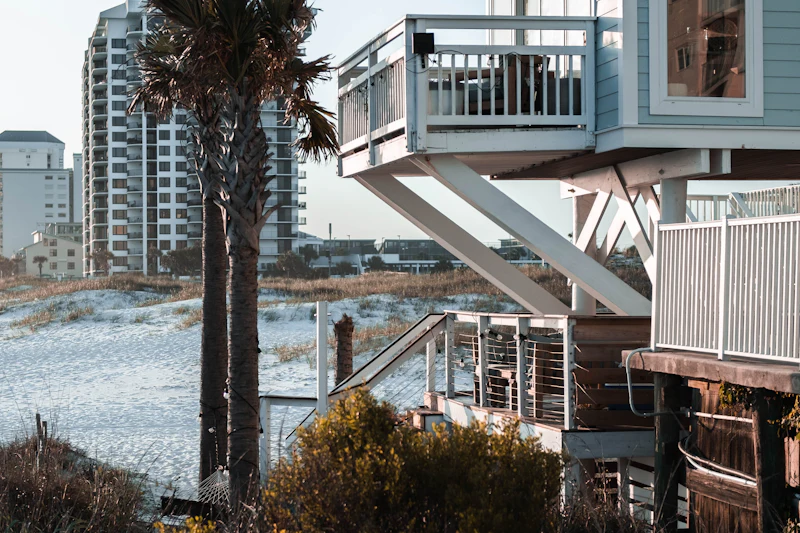
- Fill and slab: the site is raised with compacted fill and the slab sits above the required height, where local rules allow fill.
- Stem walls: a perimeter foundation wall raises the floor, with the space inside filled.
- Piers, columns or piles: the house sits on an open foundation, and the space below is limited to parking, building access and storage.
Each method changes the foundation design, the connection of the house to the foundation, and how the building resists both flood and wind loads. We design these elevated foundations and the connections that tie the house to them. See our structural engineering in Florida services.
The Space Below the Lowest Floor
An enclosed area below the required elevation, such as a garage or a storage room under an elevated home, has strict limits. FEMA’s technical bulletins explain the main ones:
- Flood openings: walls that enclose the space must let flood water flow in and out, so the water pressure on both sides stays equal (Technical Bulletin 1).
- Flood damage-resistant materials: everything below the required elevation must be able to get wet without serious damage (Technical Bulletin 2).
- Use: the space is for parking, building access or storage, not living space.
Our article on enclosing the space below an elevated house covers this in more detail.
Equipment and Utilities
Air conditioning units, electrical panels, water heaters and similar equipment also need to sit at or above the required elevation, on a platform, a wall bracket or an upper floor. Ducts and wiring that must run lower need flood-resistant details. Our article on AC equipment in Florida flood zones explains the options.
Existing Homes: Additions and Major Renovations
An existing home in zone AE does not have to be raised just because it is below the current required elevation. That changes with a large project. When the cost of an improvement, or of repairs after damage, reaches the substantial improvement or substantial damage threshold, the whole building has to meet the current floodplain rules, which can mean elevating it. Our article on the Florida substantial damage rule explains how that test works.
An addition below the threshold has its own rules under the Florida Building Code, Existing Building (section 1103.5). An addition that is not structurally connected to the house must meet the flood rules for new construction. An addition built onto the house does not have to, as long as its lowest floor is no lower than the lower of the house’s lowest floor or the required flood elevation, and it does not make the house less compliant with the flood rules. Local floodplain rules can be stricter, so before planning an addition or a remodel, ask the building department how the rule applies to your address.
What We Prepare for a Zone AE Project
- Foundation design for the required floor height: footings, stem walls, piers or columns.
- Connections from the house to the foundation for flood and wind loads.
- Details for the space below: flood openings, breakaway or non-structural walls where they apply, and flood-resistant materials.
- Platforms and supports that raise mechanical and electrical equipment.
- Repair and elevation designs for existing homes after a substantial damage determination. For projects around Tampa Bay, see our Tampa page, and for Central Florida, our Orlando page.
Frequently Asked Questions
What does flood zone AE mean in Florida?
It is part of the Special Flood Hazard Area on FEMA’s flood maps where a base flood elevation is published. The base flood is the flood with a 1 in 100 chance of being equaled or exceeded in any given year.
How high does a new house in zone AE have to be?
Under the Florida Building Code, the lowest floor must be at least the base flood elevation plus 1 foot. Some counties and cities add their own requirements, so check with your floodplain administrator.
Can I build a garage below the flood elevation in zone AE?
An enclosed area below the required elevation can be used for parking, building access or storage. Its walls need flood openings, and the materials must be flood damage-resistant.
Does my existing home in zone AE have to be elevated?
Not by itself. A home generally has to meet current floodplain rules when it is substantially improved or substantially damaged. Ask the building department how the rule applies before planning a large project.
What is the difference between zone AE and zone VE?
Both are in the Special Flood Hazard Area with a base flood elevation. Zone VE is the coastal area that also faces waves, and it has stricter foundation rules.
Sources
- FEMA, Glossary: Flood Zones
- FEMA, Glossary: Zone AE
- FEMA, Glossary: Base Flood Elevation (BFE)
- Collier County, Floodplain Management, Building Within the Floodplain
- FEMA, National Flood Insurance Technical Bulletins
- FEMA, Frequently Asked Questions: Substantial Damage
- Florida Building Commission, Florida Building Code Information
We post one project and one code or engineering note every week on LinkedIn. Follow Chrome Stone on LinkedIn