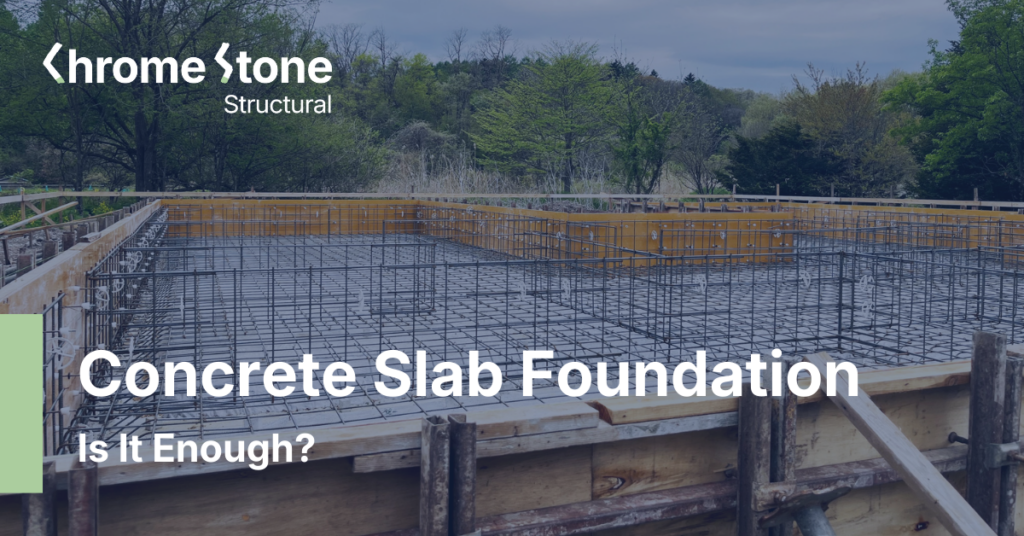
Is a Concrete Slab Enough for Your Building?
When starting a new project, one of the first major structural decisions is the foundation. Many assume a concrete slab foundation is always sufficient. In some projects, it is. In others, it may limit structural performance or future expansion.
The real question is not whether slab foundations are common; it’s whether they are structurally appropriate for your building.
What Is a Concrete Slab Foundation?
A concrete slab foundation is a flat, ground-level concrete base that supports the structure directly. It eliminates crawl spaces and basements and is often used in residential and commercial projects.
It’s popular because it can reduce construction time and initial cost. However, foundation selection should never be based on speed alone.
Structural capacity, soil behavior, and future load demands must be evaluated first.
Understanding Different Building Foundation Types
There are several building foundation types, and each serves a different purpose depending on the project:
- Slab-on-grade systems
- Crawl space foundations
- Basement foundations
- Reinforced structural systems for large-scale buildings
Among the various concrete foundation types, the slab foundation is one of the simplest, but not always the most suitable.
Choosing the right system depends on:
- Soil conditions
- Structural loads
- Planned building height
- Future expansion
When a Slab Foundation Works Well
A slab foundation may be sufficient when:
- The soil is stable
- The building is single-story
- Loads are moderate
- No additional floors are planned
For many small projects, including certain residential developments, a properly engineered slab performs effectively.
But the key phrase is properly engineered.
When a House Slab Foundation May Not Be Enough
A house slab foundation may require structural upgrades if:
- You plan to add another level
- The building includes wide spans or heavy loads
- The soil shows settlement risk
- The property is located in seismic regions
In places like California, structural design becomes even more critical. What appears simple on the surface can become expensive later if the foundation was not designed with future demands in mind.
Why Structural Evaluation Matters
Not all concrete foundation types perform the same way under load.
A foundation is not just a concrete layer, it is a load-transfer system designed to safely distribute structural forces to the ground.
Early structural planning helps:
- Prevent costly modifications later
- Reduce construction delays
- Avoid structural reinforcement after construction
- Maintain long-term performance
At Chrome Stone, we design structural systems for projects of all sizes, from small residential modifications to full commercial buildings, warehouses, and data centers.
Our approach remains consistent:
Low cost – Less time – High quality
The right structural decision at the beginning protects the entire investment.
Not Sure If a Concrete Slab Foundation Is Right for You?
Every building is different. Soil, load requirements, usage type, and future expansion plans all influence whether a concrete slab foundation is enough.
Before moving forward, get a professional structural evaluation.
Planning to build, modify, or expand your property?
Fill out our consultation form today and let our structural engineering team review your project requirements. A proper foundation decision now can save significant time and cost later.
Frequently Asked Questions
Is a concrete slab foundation cheaper than other building foundation types?
In many cases, yes. A slab foundation can reduce initial construction time and cost. However, long-term performance and future expansion should be evaluated before choosing solely based on price.
How long does a slab foundation last?
A properly engineered and constructed slab foundation can last decades. Durability depends on soil conditions, load design, and structural detailing.
Can you add a second floor to a house slab foundation?
It depends on whether the original foundation was designed to support additional load. Structural evaluation is required before adding another level.
What problems can occur with slab foundations?
Common issues include cracking due to soil movement, settlement, or improper load distribution. Proper structural design significantly reduces these risks.
How do I choose between different concrete foundation types?
The decision should be made by a structural engineer after reviewing soil reports, architectural plans, and future usage needs.