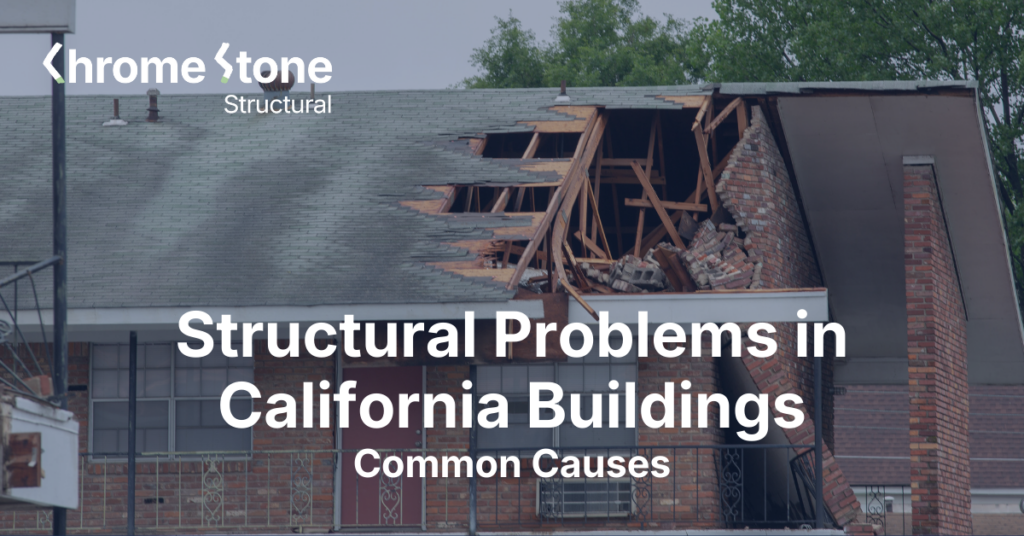
Structural Problems in California Buildings: Common Causes
If you own or manage a building in California, you’ve probably noticed how quickly small issues can turn into real concerns. A crack that wasn’t there before. Doors that suddenly scrape the frame. Floors that feel uneven underfoot. These aren’t just signs of age; in many cases, they point to structural design problems that only reveal themselves once a building has been tested by time, soil movement, or seismic activity.
California is one of the most demanding places in the U.S. to build. Earthquake exposure, expansive soils, hillside construction, and strict seismic codes all place continuous stress on structures. When early design decisions don’t fully account for these conditions, building structural issues often appear years later, sometimes when owners least expect them.
At Chrome Stone Structural, we work on projects across California where the goal is always the same: deliver high-quality engineering in less time, and with a competitive, controlled budget, so problems are addressed early rather than after damage escalates.
Why are building structural issues more common in California
Many owners assume structural problems come from poor construction. In reality, design assumptions play a much larger role. FEMA reports that a significant percentage of structural damage in California buildings is tied to seismic and soil-related movement rather than material failure alone. That matters because it means problems often originate on paper, long before construction begins.
A recent structural assessment we handled involved a low-rise commercial building that had recurring slab cracks. The repairs kept failing. The root cause wasn’t workmanship; it was an original foundation design that didn’t properly account for expansive clay soil. Once the structure was re-evaluated and redesigned, the issue stopped entirely, without rebuilding the whole building.
This pattern is common. Structural problems are rarely sudden. They build quietly.
Living in a house with structural issues: what owners notice first
A house with structural issues doesn’t always show dramatic damage. Most homeowners describe a gradual change, something just feels off.
Common early signs include:
- Cracks that reappear after patching
- Windows and doors drifting out of alignment
- Floors sloping slightly over time
- Gaps forming between walls and ceilings
According to the American Society of Civil Engineers, homes that lack proper seismic load paths are far more likely to experience cumulative damage, even without a major earthquake event. In California, these small warning signs should never be ignored.
Structural failure causes engineers see again and again
When we investigate structural failure causes, the same themes appear across residential and commercial projects:
- Seismic forces were underestimated during design
- Poor load transfer between floors, walls, and foundations
- Soil conditions are oversimplified or ignored
- Structural changes made during renovations without recalculation
- Cost-cutting decisions were applied too late in the design process
A Deloitte 2024 construction risk report found that projects requiring late-stage structural corrections experienced up to 23% higher lifecycle costs. That aligns closely with what we see in the field. The earlier the engineering is done right, the less expensive the project becomes overall.
How a structural issues house can become a financial problem
A structural issues house often starts with a manageable fix, but a delay changes everything.
We recently worked with a homeowner planning to remove a single interior wall during a remodel. The contractor assumed it was non-structural. It wasn’t. That wall was part of the lateral resistance system. Removing it without redesign would have weakened the entire house. By addressing the issue early, we redesigned the load path efficiently, avoided permit delays, and kept the project within budget.
This is where Chrome Stone’s approach matters. We don’t overdesign. We design smart, focusing on high quality, less time, and less money over the full life of the building.
Why structural design problems need engineers, not quick fixes
Structural concerns aren’t cosmetic. Patching cracks or reinforcing one area without understanding the full system often makes things worse. California building codes are strict for a reason; structures must behave as a system, especially during seismic events.
At Chrome Stone Structural, our role is to:
- Identify the real cause, not just the symptom
- Design solutions that are practical and buildable
- Reduce unnecessary material and construction costs
- Deliver clear drawings that speed approvals
- Protect long-term safety without inflating budgets
Good engineering doesn’t slow projects down. It keeps them moving.
FAQ
What are the most common structural design problems in California buildings?
They typically involve seismic load assumptions, foundation designs that don’t match soil behavior, and unengineered changes during renovations.
How can I tell if my building has structural issues?
Recurring cracks, sloping floors, sticking doors, and visible separations are common warning signs.
Are building structural issues always expensive to fix?
No. When identified early, engineering solutions are often straightforward and cost-effective.
Can a house with structural issues still be safe?
In many cases, yes, but only after proper structural evaluation and corrective design.
Why do some buildings fail years after construction?
Because stresses from soil movement and seismic activity build over time, exposing design weaknesses gradually.
How does Chrome Stone Structural help prevent these problems?
By designing specifically for California conditions and delivering high-quality engineering in less time and at a competitive cost.