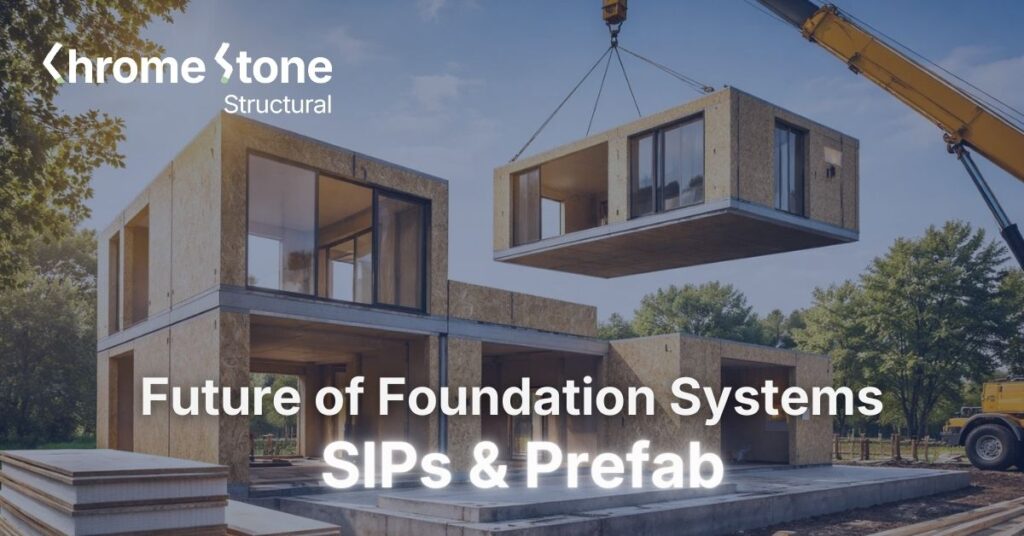
The Future of Foundation Systems: SIPs, Prefab & Panels
Construction methods are changing quickly. As projects aim to reduce timelines and improve efficiency, new building approaches are influencing how structures, and even foundations, are designed.
Technologies like prefabricated building systems, modular construction, and advanced panel systems are becoming more common across residential, commercial, and industrial developments.
But while the construction method may evolve, one rule remains constant: the structure must still perform safely and efficiently.
Understanding how these systems interact with structural design is becoming increasingly important.
Why Prefabricated Building Systems Are Growing in Popularity
Traditional construction often relies on sequential work on site. Prefabrication shifts part of that work into controlled manufacturing environments.
With prefabricated building systems, structural components are produced off-site and assembled on location.
This approach offers several advantages:
- Faster project timelines
- Reduced on-site labor
- Improved consistency in structural components
- Less exposure to weather-related delays
Across California, where construction schedules are often tight and regulatory processes are strict, prefab systems can help projects move more efficiently.
However, they require precise structural coordination.
The Rise of Modular Building Construction
Another growing trend is modular building construction, where entire building sections are manufactured off-site and installed as completed modules.
Modular systems are being used for:
- Multi-family residential buildings
- Hotels and student housing
- Temporary or rapid-deployment facilities
- Certain commercial and industrial structures
While modular construction can accelerate schedules, it also places greater demands on structural planning.
Modules must align perfectly with the foundation and structural support system.
Even small miscalculations can cause installation delays.
Structural Insulated Panels and Their Role
One system gaining attention is structural insulated panels construction, commonly referred to as SIPs.
These panels combine structural framing with insulation, creating lightweight wall and roof components that can be assembled quickly.
SIPs can contribute to:
- Faster building enclosure
- Energy efficiency improvements
- Reduced framing complexity
However, structural engineers must carefully evaluate how these panels interact with load paths, foundation systems, and overall building stability.
In seismic regions like California, this coordination becomes even more critical.
Why Structural Coordination Still Matters
Even with advanced prefab systems, the foundation and structural framework remain the backbone of the building.
Modern prefabricated building systems require:
- Accurate load calculations
- Precise alignment with foundation design
- Coordination between factory-produced components and site-built elements
- Compliance with local building codes
Without proper structural engineering, prefabrication can create coordination challenges rather than solving them.
Looking Ahead: Smarter Structural Integration
As construction continues evolving, structural engineering will play an even greater role in integrating new building technologies.
Successful projects will depend on:
- Early coordination between architects, engineers, and manufacturers
- Clear structural documentation
- Accurate planning for foundation and load transfer systems
- Adaptability for future modifications
Whether a project uses traditional construction or modern prefab systems, structural efficiency remains the key to long-term performance.
At Chrome Stone, we work with a wide range of building types, from residential developments to warehouses and data centers, helping ensure that structural systems align with modern construction methods.
Our approach stays consistent:
Low cost – Less time – High quality
Considering Modular or Prefabricated Construction?
If you’re exploring prefab or modular building solutions, it’s important to evaluate how these systems interact with your structural design and foundation planning.
Our structural engineering team can review your project and help ensure the building system and structural framework work together efficiently.
Reach out through our consultation form to discuss your project and explore how modern construction methods can integrate with strong structural design.
Frequently Asked Questions
What are prefabricated building systems?
Prefabricated building systems involve manufacturing structural components off-site and assembling them on location, which can improve construction efficiency and quality control.
How does modular building construction affect structural design?
Modular construction requires precise structural coordination because modules must align exactly with foundations and supporting structural systems.
Are structural insulated panels strong enough for structural buildings?
Yes, when properly designed and engineered. SIPs can provide structural strength while improving energy efficiency, but they must be integrated correctly with the building’s load system.
Do prefab systems reduce construction time?
In many cases, they do, since much of the construction process happens in a controlled factory environment before arriving on site.
Are prefab and modular systems common in California?
Yes, they are becoming more common as developers look for ways to accelerate construction schedules while maintaining structural quality.