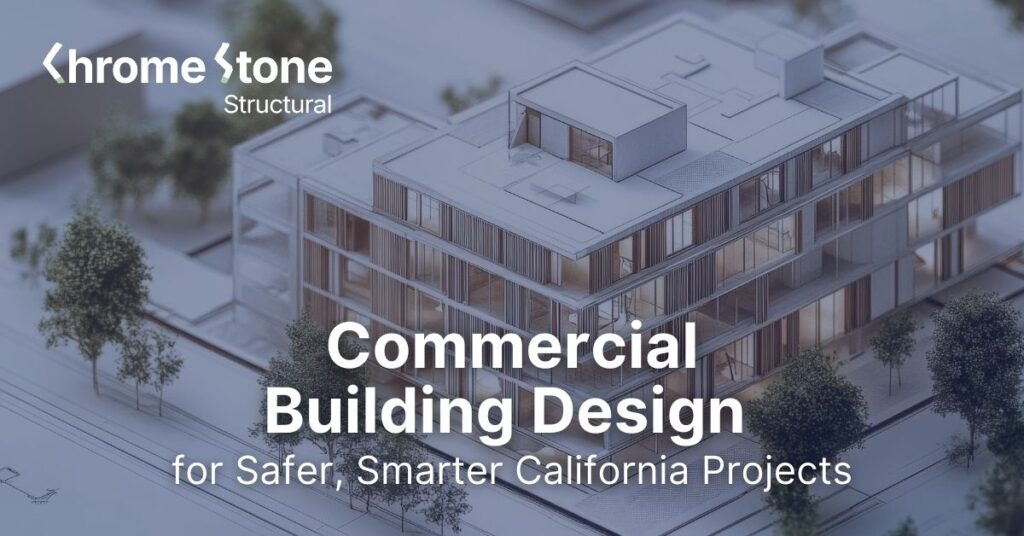
Commercial Building Design: Building Strong, Practical Spaces for California
Whether you’re planning a retail store, office building, warehouse, medical clinic, or mixed-use space, commercial building design shapes every part of your project, from safety to cost to how easy the building is to construct.
In California, strong design matters even more. Earthquake requirements, soil conditions, and strict codes mean you need the right people guiding the structure from the very beginning.
At Chrome Stone Structural, we help business owners, developers, and architects design commercial buildings that are safe, efficient, and cost-friendly. We keep projects moving with high-quality engineering delivered in less time and aligned with your budget.
Building Design Engineer
The Person Who Makes the Building Work Behind the Scenes
A building design engineer is responsible for how the structure supports weight, handles seismic forces, and stays stable over time. They translate architectural ideas into something that can actually be built safely.
Good engineering helps you:
- Reduce construction cost
- Avoid redesigns
- Speed up plan check approval
- Prevent structural problems in the future
- Ensure compliance with California codes
This is especially important in commercial projects, where safety and functionality affect not just the owner, but everyone who enters the building.
Building Structural Engineer
Keeping Your Commercial Project Safe and Buildable
A building structural engineer looks at every part of the building’s skeleton, columns, beams, slabs, foundations, roof systems, and ensures they all work together.
For commercial buildings, the engineer plans for:
- Heavy equipment loads
- Large open spaces
- Complex roof systems
- High foot traffic
- Fire and safety requirements
- Seismic stability
- Future expansions
Chrome Stone Structural designs efficient, buildable systems that keep construction smooth and predictable.
Commercial Building Design (Commercial Projects)
Balancing Safety, Cost, and Function
When planning commercial building design commercial projects, owners often worry about price and timeline. The truth is, structural decisions influence both more than almost anything else.
Early engineering helps with:
- Choosing cost-effective structural systems
- Aligning beams and columns with architectural needs
- Reducing unnecessary steel or concrete
- Planning clear load paths for safety
- Designing flexible layouts for future changes
- Avoiding costly surprises during construction
We guide you through every stage so that your building performs well, and stays within budget.
Building Structural Design
The Foundation of a Smooth Construction Process
Building structural design affects contractors, inspectors, and every detail of the build. Clean, simple designs reduce questions on site and help avoid delays.
A solid structural design includes:
- Clear foundation plans
- Efficient beam and column layouts
- Smart lateral systems for earthquakes
- Easy-to-follow drawings
- Material choices that fit the project budget
- Systems that pass inspection the first time
Chrome Stone’s drawings focus on clarity and practicality, helping the project move forward without confusion.
Commercial Structural Engineering
Designed for Real-World Performance
Commercial structural engineering is more than just math. It involves understanding how the building will be used, today and years from now.
Our California-focused commercial engineering covers:
- Offices and retail spaces
- Warehouses and storage facilities
- Medical and dental facilities
- Restaurants and cafés
- Worship facilities
- Mixed-use buildings
- Renovations and tenant improvements
We design commercial structures that are durable, safe, and adaptable, while staying mindful of your budget.
FAQ: Commercial Building Design & Structural Engineering
1. What does a building design engineer do?
They turn architectural ideas into safe, practical structural systems that can be built and approved in California.
2. Why is structural engineering so important for commercial projects?
Commercial buildings handle heavier loads and more complex layouts, so they require careful planning and seismic-ready design.
3. Does commercial structural engineering affect cost?
Yes. Efficient designs reduce materials, simplify construction, and speed up inspections.
4. What’s the difference between architectural and structural design?
Architecture shapes the look and function; structural engineering makes sure the building can safely support it.
5. Do California commercial buildings need engineered plans?
Yes. All commercial projects require structural calculations and drawings to meet state and local codes.
6. How does Chrome Stone help commercial clients?
We deliver clear structural plans, smart solutions, and fast turnaround, making construction easier and keeping budgets under control.
Ready to Start Your Commercial Project?
If you want a commercial building that is strong, efficient, and designed with real California conditions in mind, Chrome Stone Structural is here to help.
We’ll guide you through structural options, review your plans, and create a design that supports your goals, safely and affordably.
Fill out the form to get started. We’d be happy to work with you.